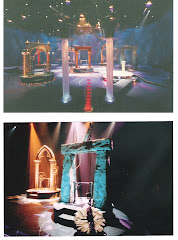
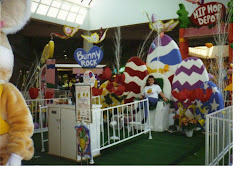
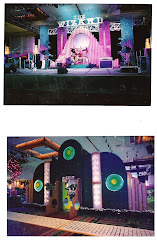
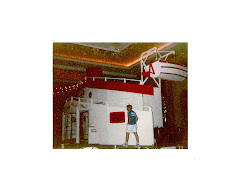
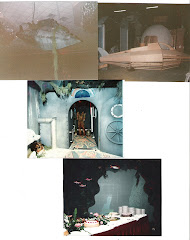
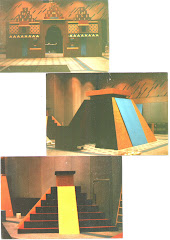
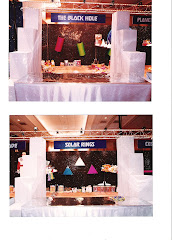
I know I'll regret posting this whenever random memories surface that could have been included in the F/X portion of my show biz history. Nine and a quarter years is the second longest time I've ever stayed with one company, and the longer one was the family commercial art business. Truth be told, the longest stretch there, March '78 to March '87, was three months shorter - but I digress.
Carmen graduated Leslie University's Intensive Residency program in May of '04 and immediately began getting together her applications to three theological schools: Vanderbilt Divinity in Nashville, Harvard Divinity in Cambridge, MA and Andover Newton Theological School in Newton, MA. I could tell by the vibes that she wanted to go to greater Boston, but would go to Tennessee if that was her only option. It wasn't. It came to pass, as everyone but Carmen knew it would, that she was accepted to all three. She went to an open house weekend at both Harvard and Andover Newton, and her fancy was tickled by ANTS. In those early months of 2005 we got the house in selling shape and began pulling up stakes, one stake at a time.
Everyone at F/X knew what was happening: the timekeeper was moving away. Management began pressing me to declare when I would be leaving. I consulted with my management, and she decided that April 30th would be a good time. F/X hired a new Jim, and I began training the next decks-a-trim installation specialists. As April waned, there was talk of a going away dinner. A dinner? Why do I get a dinner? I've seen hundreds of people leave the fold, and none of them got a dinner. Remembering Red Buttons at the Dean Martin Celebrity Roasts of the seventies, a speech began writing itself in my head. It described many of the great F/X employees who left, and never got a dinner - including Mack's own mother-in-law Peggy, who retired three times and STILL never got a dinner. It was pretty funny, and the large gathering (for a free meal) seemed to enjoy it. The hard part was that the dinner was on the 29th, so I still had one more day to go.
My last day was hard to get through. I don't remember doing anything productive. I cleaned out my box there at the end of my twenty by six foot table. I turned in my company-issued tools and packed up my own tools into my Toyota T100 pickup truck. I pulled out my huge pile of drawings from nine and a quarter years of building scenery exhibits and displays. Anthony Ferguson seemed interested in them, but even more interested in getting a good recording of me shouting "Dot's On The Dot!" before I left. This was very confusing to people who had been conditioned to go on break when they heard that sound.
I was sad to leave, but excited about leaving Florida. I wouldn't need a vehicle in Boston, so I could shed that piece of hardware from my kit! And after twenty-seven years of suffering through summer, we were going to spend at least four years suffering through winter!
Monday, February 14, 2011

Saturday, January 29, 2011
Well She's A Brick - Set
The first brick set we did was WAGA, the Fox station in Atlanta. Of course Atlanta thinks of itself as a brick city - Georgia is the red clay capital of the world. So there were brick walls, brick headers, brick columns, brick everywhere. Eddie and I knew how to do brick: go to the lumber yard in Winter Park and buy 4X8 sheets of brick paneling. It looks great with hardly any labor other than cutting chunks to fit while maintaining the integrity of the brick pattern. Other guys knew other ways: buy vacu-formed plastic sheets; make a brick-shaped stamp and dip it in paint between stampings on the wall. No. The New York designers had done a brick wall for MSNBC, shown it to WAGA, and that's what they wanted. Now, try to imagine the most labor-intensive way you can think of to make artificial bricks, and I'll bet the way we were instructed to do it outdoes your idea.
Stage one: cut up 1/2" thick homasote (pressed paper board used for insulation and sound deadening) into brick-sized chunks, which, of course, requires a consensus to be struck about what size a brick-sized chunk should be, which took the better part of a day. Stage two: devise a method by which a brick-sized chunk of homasote can be quickly and fairly consistently split into two brick-sized chunks. This also took the better part of a day. After trying saws, a machete, chisels and any number of knives, the winner was a two inch wide strip of 1/8" aluminum, sharpened on one long edge and wrapped with tape around the end for holding it in place, laid along the center of the edge of each chunk and pounded through with a twenty ounce hammer. So there was also the need for a couple of blocks to hold the brick chunk vertical while its thickness was halved. So, after several days of trial and error and pounding the aluminum blade, we had several boxes of raw material. Stage three: using a series of spacing jigs, the split bricks were contact cemented and stapled to the board, rough side out, with each edge of each wall, header, column coming out to even bricks, which took a little finagling to space correctly. Stage four: the art department took over, first sliming the whole wall, header, column, whatever with joint compound, then when that was dry, he base coated it all brick red, then spattered it all three or four more colors - black, orange, white, yellow whatever - and when that was dry, painted in the mortar lines between each brick. We all just shook our heads in wonderment as the weeks ticked by and slowly this whole process became - I admit it - very realistic rough-brick treatment. Yes, we said, it really looks better than the paneling or the plastic - but when you watch the news, is that what you are seeing? Not if the news is at all interesting. And we knew from Court TV that you almost never see any part of the set anyway.
The bottom line for us is, if someone is happy to pay us to turn a one-day project into a three-week project, we're happy to take their money.
A year or so later, I heard that we were going to do WMAR TV Baltimore. I was bred and bawn in Baltimore, so I had an inkling that the box of leftover bricks were going to finally get used. Even though this set was designed by F/X designers, they opted for the same proven method for the whole WMAR set. Proven, that is, to be the most time-consuming possible way to make fake brick walls short of slicing up real bricks.
Stage one: cut up 1/2" thick homasote (pressed paper board used for insulation and sound deadening) into brick-sized chunks, which, of course, requires a consensus to be struck about what size a brick-sized chunk should be, which took the better part of a day. Stage two: devise a method by which a brick-sized chunk of homasote can be quickly and fairly consistently split into two brick-sized chunks. This also took the better part of a day. After trying saws, a machete, chisels and any number of knives, the winner was a two inch wide strip of 1/8" aluminum, sharpened on one long edge and wrapped with tape around the end for holding it in place, laid along the center of the edge of each chunk and pounded through with a twenty ounce hammer. So there was also the need for a couple of blocks to hold the brick chunk vertical while its thickness was halved. So, after several days of trial and error and pounding the aluminum blade, we had several boxes of raw material. Stage three: using a series of spacing jigs, the split bricks were contact cemented and stapled to the board, rough side out, with each edge of each wall, header, column coming out to even bricks, which took a little finagling to space correctly. Stage four: the art department took over, first sliming the whole wall, header, column, whatever with joint compound, then when that was dry, he base coated it all brick red, then spattered it all three or four more colors - black, orange, white, yellow whatever - and when that was dry, painted in the mortar lines between each brick. We all just shook our heads in wonderment as the weeks ticked by and slowly this whole process became - I admit it - very realistic rough-brick treatment. Yes, we said, it really looks better than the paneling or the plastic - but when you watch the news, is that what you are seeing? Not if the news is at all interesting. And we knew from Court TV that you almost never see any part of the set anyway.
The bottom line for us is, if someone is happy to pay us to turn a one-day project into a three-week project, we're happy to take their money.
A year or so later, I heard that we were going to do WMAR TV Baltimore. I was bred and bawn in Baltimore, so I had an inkling that the box of leftover bricks were going to finally get used. Even though this set was designed by F/X designers, they opted for the same proven method for the whole WMAR set. Proven, that is, to be the most time-consuming possible way to make fake brick walls short of slicing up real bricks.
Monday, January 10, 2011
Inventions
One thing about working in show biz is that there are things to be done that nobody has ever encountered, st least not often enough for the special tool or hardware to be available. Thinking back to Imasge International, I'm remembering an oblong tube of brass that was just wide enough and deep enough to slide over a cup hook, with a short shaft that went into your cordless drill. Each Christmas season, the guys hung decorations all over Disney World and other places using cup hooks - hundreds of them. This invention turned cup hook installation into a seconds long project instead of a minutes long one. I didn't invent that one. I think maybe Eddie did.
In the news set business, there were several things I did that required new inventions. One design of columns included lights inside that needed to be accessed for changing tubes and whatnot by the use of "hanger bolts," threaded rods with wood screw threads on half the length and machine screw threads on the other so that it could be screwed into the wood of the column, a cover fitted over the opening with threads poking through, and wing nuts to hold the covers on. I was given this job, and seeing that there were twelve columns with ten hanger bolts each, I reasoned that my time would be well spent inventing a fast way to drive them into the wood, stopping at the proper depth. I took a turnbuckle, which had a deep threaded hole, cut off the part I didn't need, screwed a regular bolt into it, stopping at the right depth, and asked a welder to spot weld it in place. Cutting off the head of the bolt gave me a shaft for my drill. For years I used two of these installation units, one for quarter inch hanger bolts and one for five sixteenths. Just drill a pilot hole, set your hanger bolt in place, place your threaded hole on the end and pull the trigger. When the hanger seats in, reverse the drill, and move on to the next one. They worked great, if I do say so myself - and I do.
The other job, pretty much exclusively mine, was to prepare and install "decks-a-trim" (my name for it, still used today.) Decks-a-trim consisted of one and a half inch aluminum flat bar, which came in twenty foot lengths, sanded to a "brushed aluminum" finish, drilled every six inches at the position where a screw would go into the center of the top layer of plywood on a deck when the trim was wrapped around it, covering the edge of the carpet. First I invented the drilling bench, two sixteen foot long boards with legs hinged to them to bring them up to the height of the drill press. These could be installed or removed very quickly and stored against the wall. In the drilling area was a stick that located the hole to the proper plywood screwing depth, and a screw broken off six inches over from where the drill bit came down. I would drill the first hole, slide the bar over until the hole fit over the screw, drill again, slide, drill, slide etc. etc. until the entire twenty feet was drilled.
Then came the installation. The problem: a twenty foot long floppy piece of aluminum needed to be held to the proper height as it was located on the deck. Solution: two decks-a-trim support units that sat on the deck with enough weight to counterbalance the bar (I used iron stage weights) and sticking out far enough to support the bar without putting any strain on the location being screwed, at the correct height to keep everything parallel. I made a long one that stuck out about four feet beyond the edge of the deck, and a short one, about two feet beyond. For years they made trim installation - if not effortless, then at least possible for one person to accomplish.
One day I saw Keith running nuts around with his fingers along most of the length of six-foot threaded rods "Hmmm," I said to myself. I set up a six inch hole saw, wrapped a couple layers of tape around it, and put it in my drill. Putting the tape against the nut and pulling the trigger, the nut flew along those threads. I got an "extra mile" award out of that, nominated by Keith.
The thing about working in show biz - it was always interesting.
In the news set business, there were several things I did that required new inventions. One design of columns included lights inside that needed to be accessed for changing tubes and whatnot by the use of "hanger bolts," threaded rods with wood screw threads on half the length and machine screw threads on the other so that it could be screwed into the wood of the column, a cover fitted over the opening with threads poking through, and wing nuts to hold the covers on. I was given this job, and seeing that there were twelve columns with ten hanger bolts each, I reasoned that my time would be well spent inventing a fast way to drive them into the wood, stopping at the proper depth. I took a turnbuckle, which had a deep threaded hole, cut off the part I didn't need, screwed a regular bolt into it, stopping at the right depth, and asked a welder to spot weld it in place. Cutting off the head of the bolt gave me a shaft for my drill. For years I used two of these installation units, one for quarter inch hanger bolts and one for five sixteenths. Just drill a pilot hole, set your hanger bolt in place, place your threaded hole on the end and pull the trigger. When the hanger seats in, reverse the drill, and move on to the next one. They worked great, if I do say so myself - and I do.
The other job, pretty much exclusively mine, was to prepare and install "decks-a-trim" (my name for it, still used today.) Decks-a-trim consisted of one and a half inch aluminum flat bar, which came in twenty foot lengths, sanded to a "brushed aluminum" finish, drilled every six inches at the position where a screw would go into the center of the top layer of plywood on a deck when the trim was wrapped around it, covering the edge of the carpet. First I invented the drilling bench, two sixteen foot long boards with legs hinged to them to bring them up to the height of the drill press. These could be installed or removed very quickly and stored against the wall. In the drilling area was a stick that located the hole to the proper plywood screwing depth, and a screw broken off six inches over from where the drill bit came down. I would drill the first hole, slide the bar over until the hole fit over the screw, drill again, slide, drill, slide etc. etc. until the entire twenty feet was drilled.
Then came the installation. The problem: a twenty foot long floppy piece of aluminum needed to be held to the proper height as it was located on the deck. Solution: two decks-a-trim support units that sat on the deck with enough weight to counterbalance the bar (I used iron stage weights) and sticking out far enough to support the bar without putting any strain on the location being screwed, at the correct height to keep everything parallel. I made a long one that stuck out about four feet beyond the edge of the deck, and a short one, about two feet beyond. For years they made trim installation - if not effortless, then at least possible for one person to accomplish.
One day I saw Keith running nuts around with his fingers along most of the length of six-foot threaded rods "Hmmm," I said to myself. I set up a six inch hole saw, wrapped a couple layers of tape around it, and put it in my drill. Putting the tape against the nut and pulling the trigger, the nut flew along those threads. I got an "extra mile" award out of that, nominated by Keith.
The thing about working in show biz - it was always interesting.
Saturday, December 4, 2010
Home Shopping Network
One of the most challenging pieces I ever had to engineer for F/X was a jewelry showcase for the Home Shopping Network across the state in St. Petersburg. This was a free-standing, multi-curvacious wall twelve feet high on one end and eight on the other, twelve feet long with swooping switchback curves coming down and a footprint that was vaguely S-shaped. It had a window through the wall with a display case mounted behind it. The designer gave us a half-inch scale model of it, and it was given to me - dumped, I would say. I had to figure out this thing that curved in every direction, disassembled into three chunks, and looked good enough for close-ups on Home Shopping's Jewelry Showcase.
Like the Grinch (my hero!) I puzzled and puzzed 'til my puzzler was sore. Finally I was saved by my old mantra, "Start with what you know." I worked out and drew the S-curve on three quarter inch plywood, carefully cut it out and duplicated it three more times with my handy dandy router (don't leave home without it!) Then I made two six foot high walls faced with bending plywood and stacked them up. I took my handy dandy pencils (d l h w t) and drew switchback curves from the top left, terminating at eight feet high on the right. After standing back to look, I modified the curves again and again until I felt they matched the model. Then I called in all the bosses to approve the line before cutting. You can always cut something, but you can't uncut it once it's cut. Eventually I cut it and capped the top edge by laying on bending plywood and tracing it. Then I traced the inside of my S-curve onto birch plywood for the front edge of the display case, cut it out and duplicated it for top and bottom.
I worked out and cut the window through the lower section, faced edges of the opening and fitted my bottom shelf behind it, blocking it in place and legging up the back. After that it was a simple matter to fit sides to the height of the window and the depth of the shelves and put the top in place. All of that was attached together, a back was fitted, and the deed was done!
Other guys had other pieces to build for the same install, and when we were all finished, we all went over to St. Pete. That was the scary part. We had to haul our stuff through a half-acre room filled from end to end, side to side with small cubicles with people sitting in front of computers wearing headsets taking orders - thousands of them at a time. We were freaked out at first, but gradually got used to the idea as we made several trips back and forth. Then it was lunch time and we went to the cafeteria, on the far end of ANOTHER half-acre room filled end to end and side to side with small cubicles with people sitting in front of computers and wearing headsets, taking orders - thousands at a time. It gave us the creeps. We installed our sets and scrammed out of there as quickly as we could.
Like the Grinch (my hero!) I puzzled and puzzed 'til my puzzler was sore. Finally I was saved by my old mantra, "Start with what you know." I worked out and drew the S-curve on three quarter inch plywood, carefully cut it out and duplicated it three more times with my handy dandy router (don't leave home without it!) Then I made two six foot high walls faced with bending plywood and stacked them up. I took my handy dandy pencils (d l h w t) and drew switchback curves from the top left, terminating at eight feet high on the right. After standing back to look, I modified the curves again and again until I felt they matched the model. Then I called in all the bosses to approve the line before cutting. You can always cut something, but you can't uncut it once it's cut. Eventually I cut it and capped the top edge by laying on bending plywood and tracing it. Then I traced the inside of my S-curve onto birch plywood for the front edge of the display case, cut it out and duplicated it for top and bottom.
I worked out and cut the window through the lower section, faced edges of the opening and fitted my bottom shelf behind it, blocking it in place and legging up the back. After that it was a simple matter to fit sides to the height of the window and the depth of the shelves and put the top in place. All of that was attached together, a back was fitted, and the deed was done!
Other guys had other pieces to build for the same install, and when we were all finished, we all went over to St. Pete. That was the scary part. We had to haul our stuff through a half-acre room filled from end to end, side to side with small cubicles with people sitting in front of computers wearing headsets taking orders - thousands of them at a time. We were freaked out at first, but gradually got used to the idea as we made several trips back and forth. Then it was lunch time and we went to the cafeteria, on the far end of ANOTHER half-acre room filled end to end and side to side with small cubicles with people sitting in front of computers and wearing headsets, taking orders - thousands at a time. It gave us the creeps. We installed our sets and scrammed out of there as quickly as we could.
Wednesday, November 17, 2010
Staring Mad
The name is Bohn - Keith Bohn. He was my best buddy at F/X from the first day I walked in to the last day I walked out. He is an excellent carpenter and a very easy going guy. There have been those who thought he was too slow to work in the business, but they just didn't have the attention span to appreciate him.
Tom "The Turkey" Magierski finally admitted it years down the line. "Every time I look at Keith he's just standing there staring at the pieces of wood on his table. As long as I watch him, that's all he does. Then I look away for a few minutes, and when I look back, the piece is finished and he's still staring at it. I don't know how he does it. He just stares it together."
He had a reddish brown Isuzu Pup pickup truck when I met him, which he drove from Deland every day. It had frequent trouble, and he was having a hard time finding parts - until one day on his way home he came up to a red light beside a baby blue Isuzu Pup, same year and everything. "You want to sell it?" he asked. "Sure!" the guy said. For the next nine (at least) years, he drove the blue one and pirated parts from the brown one.
We usually had an hour for lunch every day, which suited most of us just fine. I often tried to take a nap. Keith, however, liked to keep busy. When his son was a few years old, Keith spent his breaks and lunch hours building a "Thomas The Tank Engine" playhouse beside his table. Other days, he set up the planer and planed down pallet wood for future furniture building projects. If you've ever heard a planer, you know that there was no napping while that was going on.
I'm sure I'll think of more stories about Mr. Bohn. Luckily I can edit them in at a later time. Or maybe if I just stare at the keyboard...
Tom "The Turkey" Magierski finally admitted it years down the line. "Every time I look at Keith he's just standing there staring at the pieces of wood on his table. As long as I watch him, that's all he does. Then I look away for a few minutes, and when I look back, the piece is finished and he's still staring at it. I don't know how he does it. He just stares it together."
He had a reddish brown Isuzu Pup pickup truck when I met him, which he drove from Deland every day. It had frequent trouble, and he was having a hard time finding parts - until one day on his way home he came up to a red light beside a baby blue Isuzu Pup, same year and everything. "You want to sell it?" he asked. "Sure!" the guy said. For the next nine (at least) years, he drove the blue one and pirated parts from the brown one.
We usually had an hour for lunch every day, which suited most of us just fine. I often tried to take a nap. Keith, however, liked to keep busy. When his son was a few years old, Keith spent his breaks and lunch hours building a "Thomas The Tank Engine" playhouse beside his table. Other days, he set up the planer and planed down pallet wood for future furniture building projects. If you've ever heard a planer, you know that there was no napping while that was going on.
I'm sure I'll think of more stories about Mr. Bohn. Luckily I can edit them in at a later time. Or maybe if I just stare at the keyboard...
Tuesday, November 16, 2010
The "New" Building
As I mentioned in an earlier post, in early 1997, Mack bought an old, dilapidated long-abandoned corrugated steel building that had at one time been a manufacturing plant for concrete things such as bridge parts - huge things. The ceiling was about thirty feet up at the peak, and twenty along the walls. The overhead I beams sported an old dilapidated traveling crane system that we who carried big set pieces the length of the six hundred foot long building believed should be brought back to life. I'm guessing this still has not been done.
When we moved into the building, both ends were wide open and much of the roof and walls was missing. I often phant'sied that if Bill Villegas had not been on the crew and/or a licensed commercial contractor, Mack might not have had the temerity to buy it. We had to hire a security guard overnight for the first month or so to guard our tools and materiel while half of us built scenery and the other half worked on closing up the building during the day.
At least as threatening as the possibility of marauders getting in, was the certainty of critters that still lived there. Opossums and raccoons had nests around our stuff on the floor, dozens of pigeons nested in the I beams overhead - making a mess of whatever was stored beneath them - and thousands of lizards, snakes, insects and spiders were at home everywhere in there. Any time we moved something, three or four critters would run for cover. We had an alarm system installed, but they had to take the motion detectors off line because the nocturnal critters were so active overnight. The Ocoee police were fining us to death for "false alarms."
By the time the weather started getting unbearably hot, the whole building was closed in - a steel box baking in the Florida sun with almost no air circulation. My work table was five feet from the south wall, and I swear I could almost see it glowing red in the afternoon. Mack bought us four or five four foot diameter poultry fans. I called them "category three" fans. If I set my pencil down on the table, the fan blew it across the room. I had to staple my drawings to the table. But even so, when I picked up a staple gun or router, it almost burned my hand. It was hot in that box.
As the years progressed, Bill and his boys cut six or eight holes along the walls and installed roll-up doors. One was very near my table, which was nice. Still hot as hell, but at least I could breathe.
Rain was a factor nearly every day, especially during the summer (April - October.) There were some massive leaks in the roof that could soak whatever was beneath them in a few minutes during a Florida thunderstorm. And the shop end of the building was lower than the surrounding property, giving us a two-inch deep lake around the table saws whenever it rained. Pushing water out of the shop probably accounted for ten or fifteen man-hours a week. Another ongoing project over the years involved digging drainage ditches around the shop and plugging holes in the roof.
As my nine and a quarter years with F/X were winding to a close, the building was having its roof insulated, which was supposed to have a side-effect of stopping the last of the leaks. They hadn't made it to the shop end by the time I left, so I don't know how that went. There was a pretty good leak right in front of my tool box that still dripped on me as I cleared my stuff, the company's tools and nine years' worth of drawings out of the box.
As much as I cursed that leak and the unbearable heat, I sure miss that work table. It was the best ever.
When we moved into the building, both ends were wide open and much of the roof and walls was missing. I often phant'sied that if Bill Villegas had not been on the crew and/or a licensed commercial contractor, Mack might not have had the temerity to buy it. We had to hire a security guard overnight for the first month or so to guard our tools and materiel while half of us built scenery and the other half worked on closing up the building during the day.
At least as threatening as the possibility of marauders getting in, was the certainty of critters that still lived there. Opossums and raccoons had nests around our stuff on the floor, dozens of pigeons nested in the I beams overhead - making a mess of whatever was stored beneath them - and thousands of lizards, snakes, insects and spiders were at home everywhere in there. Any time we moved something, three or four critters would run for cover. We had an alarm system installed, but they had to take the motion detectors off line because the nocturnal critters were so active overnight. The Ocoee police were fining us to death for "false alarms."
By the time the weather started getting unbearably hot, the whole building was closed in - a steel box baking in the Florida sun with almost no air circulation. My work table was five feet from the south wall, and I swear I could almost see it glowing red in the afternoon. Mack bought us four or five four foot diameter poultry fans. I called them "category three" fans. If I set my pencil down on the table, the fan blew it across the room. I had to staple my drawings to the table. But even so, when I picked up a staple gun or router, it almost burned my hand. It was hot in that box.
As the years progressed, Bill and his boys cut six or eight holes along the walls and installed roll-up doors. One was very near my table, which was nice. Still hot as hell, but at least I could breathe.
Rain was a factor nearly every day, especially during the summer (April - October.) There were some massive leaks in the roof that could soak whatever was beneath them in a few minutes during a Florida thunderstorm. And the shop end of the building was lower than the surrounding property, giving us a two-inch deep lake around the table saws whenever it rained. Pushing water out of the shop probably accounted for ten or fifteen man-hours a week. Another ongoing project over the years involved digging drainage ditches around the shop and plugging holes in the roof.
As my nine and a quarter years with F/X were winding to a close, the building was having its roof insulated, which was supposed to have a side-effect of stopping the last of the leaks. They hadn't made it to the shop end by the time I left, so I don't know how that went. There was a pretty good leak right in front of my tool box that still dripped on me as I cleared my stuff, the company's tools and nine years' worth of drawings out of the box.
As much as I cursed that leak and the unbearable heat, I sure miss that work table. It was the best ever.
Saturday, November 13, 2010
Keeping Time
The first year, over on Currency Drive in south Orlando, morning break time happened when the "roach coach," in this case Bill's Quick Lunch, arrived and blew its horn. This happened somewhere around 10:30 - mostly. Well, for one thing, the horn wasn't that loud. For another, the many segments of the F/X space were sectioned off by concrete block walls. Plus, with compressors, table saws, routers and belt sanders going, one could be pretty near the front of the building and still not hear the horn. The system was: several guys who felt confident of their job security would gravitate out to the loading dock around 10:25 and hang out there until Bill came. Then they would jump down and get their food and have their break. The rest of the company could easily - and did often - miss out completely. Even the office people. If I happened to see the truck, I would yell out "break time" in my Dodger game "Charge!" voice, so that the whole company might know.
Then we moved to the Ocoee shop. My work table was in the end of the building nearest the road, and the truck, which was from a company called "Dot's On The Dot" rumbled past the big twenty foot wide door on its way to the main entrance, blowing its horn all the way. I nearly always saw it go by, so I would yell out "Dot's On The Dot!" loud enough for the whiole building to hear. It was very much appreciated by the warehouse guys six hundred feet away at the other end of the building, and by the people in the office, which fronted on the driveway, but they could always hear me even when they couldn't hear the horn.
It may have been a year later that the company name changed to "Southeastern Catering," but I never changed my call.
Mack was increasingly unhappy, as his union crew got brassier, to see the fifteen minute breaks stretch to twenty, twenty five, thirty minutes. He bought a toy truck with a sound track that said, "Let's get rolling," with revving truck engine noise, and he would play that over the phone system's public address mode. But, after a while, he began to think that he should delegate the break-ending job. He delegated it to me. So I drilled a piece of aluminum tubing and hung it by my bench. Fifteen minutes after the break truck arrived I would whack it in the rhythm of a song from the early sixties - whack... whack... whack whack whack... whack whack whack whack... Let's Go!
As the years rolled on, the rack of pipes and other noisemaking objects grew. I even bought a car horn and a button switch, because there were some who claimed not to hear the pipes clanging. The horn was so loud and obnoxious that I abandoned it soon after I installed it. I would bet it's still up in the structure over by my work table.
Before I left in 2005, the Fergermeister (Anthony Ferguson) spent a couple of days with a digital audio recorder, trying to get a good recording of "Dot's On The Dot" to play over the PA system. I heard tell he even used it a few times after I was gone. But then he found out what I already knew: keeping an eye out for the break truck takes dedication and diligence. Not a job for the faint of heart.
Then we moved to the Ocoee shop. My work table was in the end of the building nearest the road, and the truck, which was from a company called "Dot's On The Dot" rumbled past the big twenty foot wide door on its way to the main entrance, blowing its horn all the way. I nearly always saw it go by, so I would yell out "Dot's On The Dot!" loud enough for the whiole building to hear. It was very much appreciated by the warehouse guys six hundred feet away at the other end of the building, and by the people in the office, which fronted on the driveway, but they could always hear me even when they couldn't hear the horn.
It may have been a year later that the company name changed to "Southeastern Catering," but I never changed my call.
Mack was increasingly unhappy, as his union crew got brassier, to see the fifteen minute breaks stretch to twenty, twenty five, thirty minutes. He bought a toy truck with a sound track that said, "Let's get rolling," with revving truck engine noise, and he would play that over the phone system's public address mode. But, after a while, he began to think that he should delegate the break-ending job. He delegated it to me. So I drilled a piece of aluminum tubing and hung it by my bench. Fifteen minutes after the break truck arrived I would whack it in the rhythm of a song from the early sixties - whack... whack... whack whack whack... whack whack whack whack... Let's Go!
As the years rolled on, the rack of pipes and other noisemaking objects grew. I even bought a car horn and a button switch, because there were some who claimed not to hear the pipes clanging. The horn was so loud and obnoxious that I abandoned it soon after I installed it. I would bet it's still up in the structure over by my work table.
Before I left in 2005, the Fergermeister (Anthony Ferguson) spent a couple of days with a digital audio recorder, trying to get a good recording of "Dot's On The Dot" to play over the PA system. I heard tell he even used it a few times after I was gone. But then he found out what I already knew: keeping an eye out for the break truck takes dedication and diligence. Not a job for the faint of heart.
Subscribe to:
Posts (Atom)